

Friction Tyres
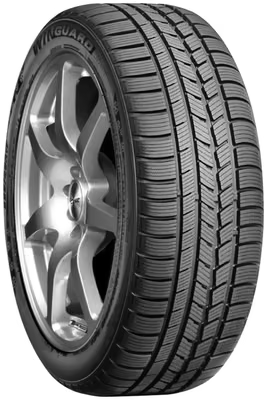
Friction tyres are non-studded winter tyres that get their grip from a soft compound and dense sipes. In Finland, friction tyres on cars and vans must carry the 3PMSF marking to count as winter tyres. They suit city driving and ploughed roads where you meet slush and bare tarmac more often than ice. Read the guide
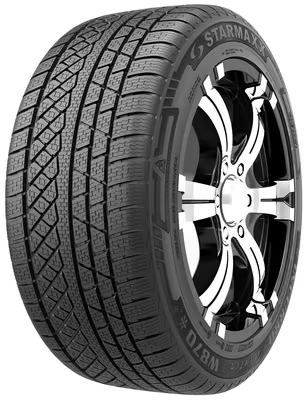


 M+S
M+S
M+S
M+S
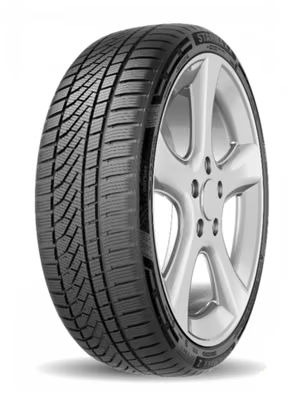 M+S
M+S
M+S
M+S
M+S
M+S
M+S
M+S
M+S
M+S
M+S
M+S
M+S
M+S
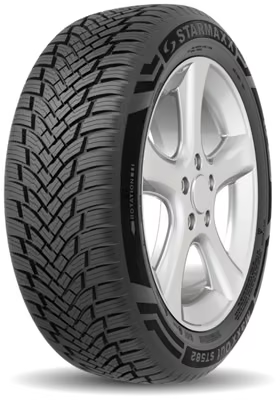 M+S
M+S
M+S
M+S
M+S
M+S
M+S
M+S
M+S
M+S
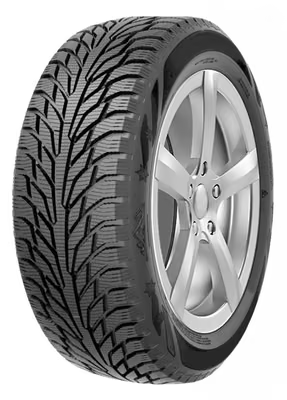 M+S
M+S
 M+S
M+S
M+S
M+S
M+S
M+S
M+S
M+S
 M+S
M+S
 M+S
M+S
 M+S
M+S
 M+S
M+S
M+S
M+S
What a friction tyre is
A friction tyre has no studs. Grip on ice and snow comes from a compound that stays soft even in hard frost, from dense sipes – thin slits that bite into the surface – and from a tread pattern that packs snow and clears water and slush. This category also includes studdable tyres sold without studs.
Nordic or Central European
Non-studded winter tyres come in two types. A Nordic friction tyre is built for ice, packed snow and long cold spells: the compound is softer and there are more sipes. A Central European winter tyre is designed for slush, wet tarmac and temperatures around zero: it is harder, more stable at high speeds and grips better in the wet, but is clearly weaker on ice.
The EU tyre label shows the difference. The ice grip symbol is intended for tyres designed for Nordic conditions and is awarded only after a passed ice test. Such tyres usually have a lower wet grip class, a consequence of their soft, ice-optimised compound.
Markings and tread depth for friction tyres
A non-studded winter tyre on a car or van counts as a winter tyre only with the 3PMSF marking – M+S alone is no longer enough. Central European winter tyres carry the same marking, so it tells you about snow grip, not ice grip: a Central European tyre with 3PMSF is legal but not a good choice for icy roads. In wintry conditions from November to March, the main grooves must be at least 3.0 mm deep. Friction and studded tyres cannot be used on the same car, because studded tyres must be fitted on all wheels. All winter tyre rules are on the winter tyres page, and there is more on markings in our 3PMSF guide.
Who friction tyres suit
Friction tyres are a good choice if you mainly drive in town and on ploughed, salted or gritted roads. On bare tarmac they are quieter than studded tyres, they wear the road surface less, and local stud bans do not apply to them. A friction tyre's grip on ice fades as the sipes wear and the rubber hardens, so check the tread depth and tyre age before winter. If you often drive on polished ice or poorly maintained back roads, consider studded tyres.