Tyres
This page lists all our tyres: summer and winter tyres, all-season tyres, and studded and friction tyres. What matters most is the right size, a sufficient load index and speed rating, and a tyre type suited to Finnish road conditions and your own driving. Below we explain how to read tyre markings and the EU tyre label.
Summer, winter or all-season
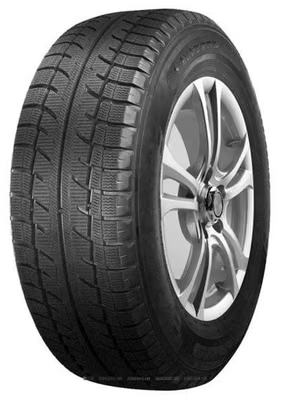
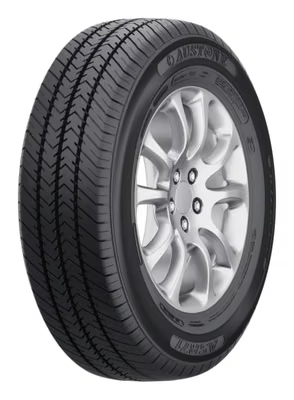
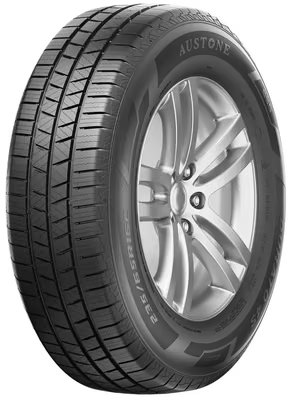
Most drivers in Finland use two sets of tyres. Summer tyres have a compound and tread designed for warm and wet tarmac. For winter, choose winter tyres – studded or non-studded – depending on the roads you drive. All-season tyres give you one set for the whole year, but on ice and snow they fall short of dedicated winter tyres.
How to read a tyre size
The size is moulded into the sidewall, for example 205/55 R16 91H:
- 205 – tyre width in millimetres
- 55 – aspect ratio: sidewall height as a percentage of the width
- R – construction, here radial
- 16 – rim diameter in inches
- 91 – load index: each tyre carries up to 615 kg
- H – speed rating: up to 210 km/h
The letters R, B, D and ZR are explained in our guide to construction codes, and the XL, HL and C markings in the guide to load markings. We recommend at least the load index the car manufacturer specifies. The legal requirement (Road Traffic Act, section 104) is that the vehicle can be loaded to its permitted road mass without exceeding the tyres' load capacity.
The EU tyre label
New car and van tyres carry an EU label with three ratings:
- Fuel efficiency (A–E): rolling resistance, which affects fuel consumption or an electric car's range.
- Wet grip (A–E): how short the braking distance is on wet tarmac.
- External rolling noise: a value in decibels and a class from A to C.
The label may also show the snow grip symbol (3PMSF), awarded only after a passed snow test, and the ice grip symbol for tyres designed for Nordic conditions. Studded tyres have no EU label.
Finding your size
The easiest way is to read the size on the tyres currently fitted to your car. You can also use the vehicle search on our home page (By vehicle): choose the make, model, year and engine to see the sizes that fit the model, with factory sizes listed first. Many models are approved for several sizes, so compare the result with your current tyres and wheels. If your car has different sizes front and rear, you will need both.