When to change tyres in Finland?
In Finland, winter tyres must be used from 1 November to 31 March if the weather or road conditions so require. Studded tyres may be used from the beginning of November to the end of March, and at other times when conditions require. The minimum tread depth is 3.0 mm for winter tyres and 1.6 mm for summer tyres.
Tyre changing rules in Finland
In Finland, winter tyres must be used from 1 November to 31 March – if the weather or road conditions so require. The requirement applies to passenger cars and vans, special purpose vehicles, motorcycles, mopeds, and trailers with a mass over 0.75 t but not exceeding 3.5 t. The rule is condition-based: if clearly summery conditions prevail during this period, driving on summer tyres is not prohibited.
Winter conditions mean snow, ice, slush or grip-reducing frost on the road. If necessary, the police assess whether the conditions required winter tyres.
What counts as a winter tyre?
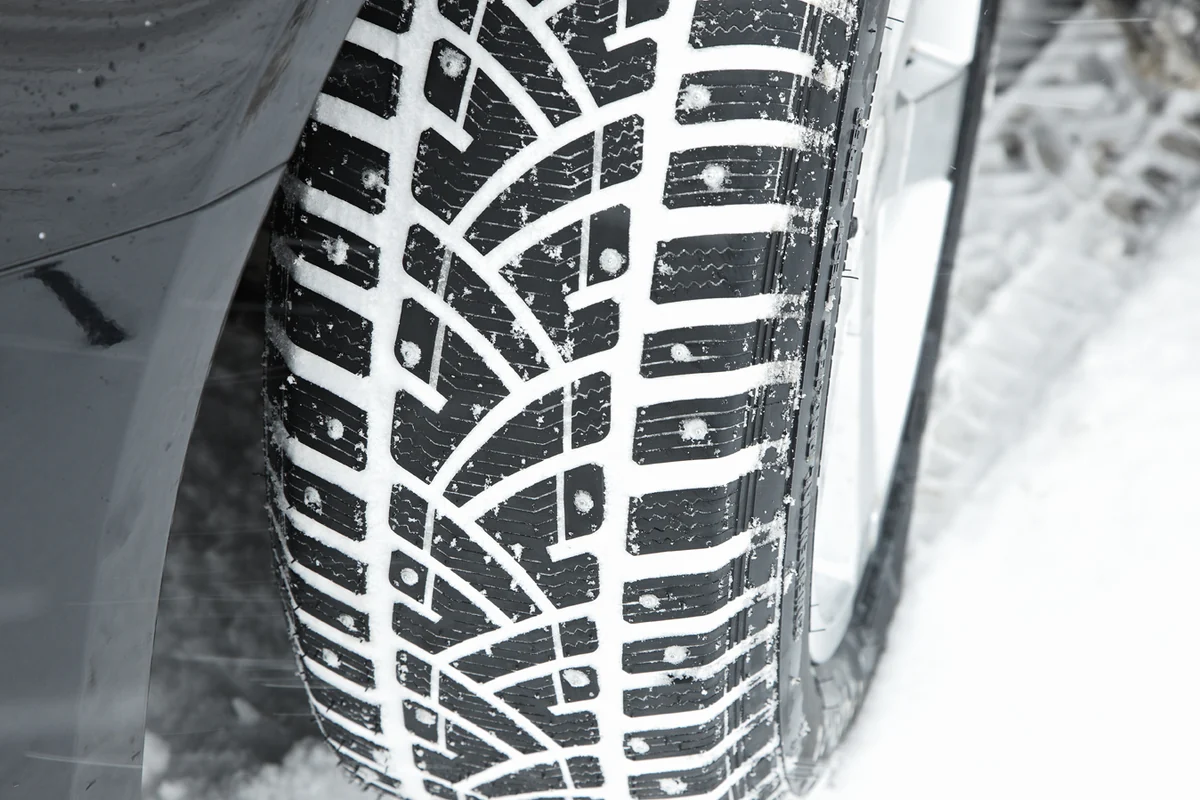
Winter tyres can be either studded or non-studded (friction tyres):
- Friction tyres must be marked with the Alpine symbol – a mountain with three peaks and a snowflake (3PMSF). Since 1 December 2024, an M+S marking alone is no longer sufficient for passenger car and van friction tyres.
- Studded tyres are accepted as winter tyres even without the 3PMSF marking.
When may studded tyres be used?
Studded tyres may be used from the beginning of November to the end of March.
- At other times, studded tyres may be used if the weather or road conditions require it, or such conditions are expected.
- In spring, remove studded tyres as soon as conditions have warmed permanently – studs wear bare asphalt and increase braking distance on dry roads.
Tread depth requirements
| Tyre type | Minimum tread depth (legal) | Recommended tread depth |
|---|
| Winter tyres (1 Nov–31 Mar in winter conditions) | 3.0 mm | at least 5 mm |
| Summer tyres | 1.6 mm | at least 4 mm |
Although the legal minimum for summer tyres is 1.6 mm, it pays to change well before that – wet grip clearly deteriorates as the tread becomes shallow.
⚠️ Consequences of the wrong tyres
- Traffic penalty fee – driving without appropriate winter tyres in winter conditions can result in a fee.
- Insufficient tread depth – tyres below the legal minimum are not approved and can result in a fee and a failed inspection.
When to switch to winter tyres?
Experts recommend switching to winter tyres when:
- The average daily temperature drops below +7 °C for several consecutive days
- Night frosts begin to occur
- The first snow or icy conditions are forecast
Practical tip: In southern Finland the change usually happens in October–November, in northern Finland clearly earlier. As Traficom reminds: it is better to change your tyres a week too early than a day too late!
When to switch to summer tyres?
Summer tyres should be fitted when:
- The average daily temperature consistently exceeds +7 °C
- No frost is forecast for the coming days
- The roads are dry and clean
Practical tip: Most drivers change in April. In northern Finland winter can linger well into spring – follow the conditions, not the calendar.
Why is +7 °C the threshold?
The +7 °C temperature is a key threshold for the rubber compound:
- Below +7 °C – summer tyres harden and lose grip
- Above +7 °C – winter tyres become too soft, wear faster and increase braking distance
All-season tyres – an alternative?
All-season tyres may suit drivers who:
- Drive mainly in the city
- Cover short distances
- Live in regions with mild winters (mainly the southern coast)
To count as a winter tyre in Finland, an all-season tyre must be marked with the Alpine symbol (3PMSF). In real winter conditions – especially in northern and eastern Finland – dedicated winter tyres are a clearly safer choice.
Recommendations
- Don't skimp on tyres – they are the car's only contact point with the road
- Switch to winter tyres when the temperature repeatedly drops below +7 °C
- Check the tread depth – below 5 mm, winter tyre grip deteriorates noticeably
- Don't use tyres older than 6 years in winter – the rubber hardens and grip declines; about 10 years is a tyre's indicative maximum age
Recommended tyres
Choose tyres for the season
Choose your tyre size to see matching products.
Recommended tyres — size examples
Examples from this selection. Choose your size to see matching tyres.
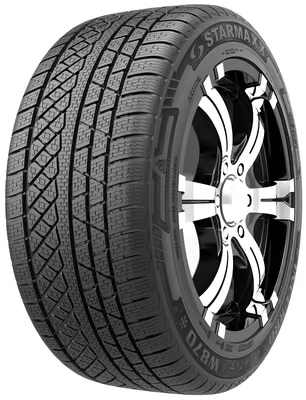
STARMAXX
Incurro Winter W870
265/60 R18 114H
Production date: 2024 - 2026
XL
XL (Extra Load)
XL (Extra Load) — reinforced for ~11% higher load than standard.
Read more →
RP
RP (Rim Protector)
RP (Rim Protector) — generic rim-guard marking.
B
Fuel efficiency (A–E)
Rolling resistance class A (best) to E. Difference between classes — up to 9% in fuel consumption.
B
Wet grip (A–E)
Wet braking distance. Class A — shortest, E — longest. The difference can reach 30%.
B|71dB
Noise level (dB)
External rolling noise in decibels. Lower number means quieter tire.
 3PMSF (Snow grip)
3PMSF — certified winter marking. Tire passed EU tests in deep snow.
Read more →
M+S
M+S (Mud & Snow)
M+S (Mud & Snow) — for light snow and mud. Not certified; weaker than 3PMSF.
Read more →
3PMSF (Snow grip)
3PMSF — certified winter marking. Tire passed EU tests in deep snow.
Read more →
M+S
M+S (Mud & Snow)
M+S (Mud & Snow) — for light snow and mud. Not certified; weaker than 3PMSF.
Read more →
Maximum quantity per item is 30. For larger orders, please contact us.
Contact us
STARMAXX
Incurro Winter W870
255/60 R18 112H
Production date: 2024 - 2026
XL
XL (Extra Load)
XL (Extra Load) — reinforced for ~11% higher load than standard.
Read more →
B
Fuel efficiency (A–E)
Rolling resistance class A (best) to E. Difference between classes — up to 9% in fuel consumption.
B
Wet grip (A–E)
Wet braking distance. Class A — shortest, E — longest. The difference can reach 30%.
B|71dB
Noise level (dB)
External rolling noise in decibels. Lower number means quieter tire.
3PMSF (Snow grip)
3PMSF — certified winter marking. Tire passed EU tests in deep snow.
Read more →
M+S
M+S (Mud & Snow)
M+S (Mud & Snow) — for light snow and mud. Not certified; weaker than 3PMSF.
Read more →
Maximum quantity per item is 30. For larger orders, please contact us.
Contact us
STARMAXX
POLARMAXX SPORT
245/40 R19 98V
Production date: 2024 - 2026
XL
XL (Extra Load)
XL (Extra Load) — reinforced for ~11% higher load than standard.
Read more →
RG
Homologation (OE)
Manufacturer homologation — tire specifically approved by the vehicle manufacturer.
Read more →
C
Fuel efficiency (A–E)
Rolling resistance class A (best) to E. Difference between classes — up to 9% in fuel consumption.
B
Wet grip (A–E)
Wet braking distance. Class A — shortest, E — longest. The difference can reach 30%.
B|72dB
Noise level (dB)
External rolling noise in decibels. Lower number means quieter tire.
3PMSF (Snow grip)
3PMSF — certified winter marking. Tire passed EU tests in deep snow.
Read more →
M+S
M+S (Mud & Snow)
M+S (Mud & Snow) — for light snow and mud. Not certified; weaker than 3PMSF.
Read more →
Maximum quantity per item is 30. For larger orders, please contact us.
Contact us
STARMAXX
POLARMAXX SPORT
225/40 R18 92V
Production date: 2024 - 2026
XL
XL (Extra Load)
XL (Extra Load) — reinforced for ~11% higher load than standard.
Read more →
RG
Homologation (OE)
Manufacturer homologation — tire specifically approved by the vehicle manufacturer.
Read more →
C
Fuel efficiency (A–E)
Rolling resistance class A (best) to E. Difference between classes — up to 9% in fuel consumption.
B
Wet grip (A–E)
Wet braking distance. Class A — shortest, E — longest. The difference can reach 30%.
B|72dB
Noise level (dB)
External rolling noise in decibels. Lower number means quieter tire.
3PMSF (Snow grip)
3PMSF — certified winter marking. Tire passed EU tests in deep snow.
Read more →
EV Ready
Optimized for EVs: higher load, lower rolling resistance, quieter cabin.
M+S
M+S (Mud & Snow)
M+S (Mud & Snow) — for light snow and mud. Not certified; weaker than 3PMSF.
Read more →
Maximum quantity per item is 30. For larger orders, please contact us.
Contact us
View all tyres in this selection
→